
SPEAKERS
Academician Ling Wen

Academician of the Chinese Academy of Engineering, President of Shandong Association for Science & Technology
China
Magnetic Levitation Energy-Saving Technology Boosts Industrial Decarbonization
Abstract
Against the backdrop of global green and low-carbon development, industrial decarbonization has become a key pathway for countries to achieve carbon peaking and carbon neutrality. Upgrading industrial equipment technology is an important decarbonization pathway. Magnetic levitation energy-saving equipment formed by magnetic levitation energy-saving technology has become an important technical support for the low-carbon transformation of industry. At present, magnetic levitation energy-saving technology is accelerating its industrialization and scenario-based application. Through source-based carbon reduction and process-based carbon reduction, a number of mature and replicable energy-saving solutions have been formed. With the further advancement of global green development, magnetic levitation energy-saving technology will usher in new developments in equipment renewal, technological upgrading, and scenario expansion
Prof. Saleem H. Ali

University of Delaware and University of New South Wales
USA & Australia
Minerals for Carbon Capture and Utilization Technologies
Abstract
The world’s transition from a fossil-fuel-driven society to a future net-zero or negative carbon dioxide emission society will require a significant scale-up of technologies to capture and convert CO2 to low carbon intensity fuels and chemicals. The deployment of “Power-to-X” technologies at gigawatt scales necessary to impact CO2 emissions and replace existing fossil-fuel-dependent processes will require vast quantities of raw materials and minerals. Many of the materials required in Power-to-X systems, such as rare earth metal yttrium and iridium, differ from those used to construct and operate petroleum-hydrocarbon-based processes for the last 100 years. Thus, electrolyzer manufacturers and mineral producers face significant challenges in matching supply to the growing demand. Asia is at the forefront of innovations in this regard alongside Australia through major research initiatives which will be profiled in this talk
Prof. Raimund Bleischwitz

Leibniz Centre For Tropical Marine Research (Zmt) & University Of Bremen
Germany
Blue Solution Pathways to Close the Emission Gap
Abstract
UNEP’s recent Emission Gap Report suggests the world is set to transgress the planetary boundary of 1.5°C global warming. However, coordinated efforts can still limit warming at a peak slightly above, manage resilience and return to a safe operating space. The ocean could be a strong ally for such efforts. The contribution addresses the ability of coastal ecosystems, in particular in the tropics, to absorb and store carbon. Such blue solution pathways could also address biodiversity losses and other challenges. They should be co-designed with multiple actors, locally on the ground and with like-minded governments and business. A multipolar world of innovative blue regions is emerging, with new alliances and a role for good Sino-EU relations. Interdisciplinary research with impacts will be pivotal for such endeavour
Prof.Neven Duic

University of Zagreb
Croatia
The Role of Carbon Capture and Utilization in Low Carbon Future
Abstract
Transition to decarbonised energy systems is becoming more attractive with fall of investment costs of renewables and volatile prices and political insecurity of fossil fuels. The renewable energy resources are bountiful, especially wind and solar, while integrating them into current energy systems is proving to be a challenge. The limit of cheap and easy integration for wind and solar has been reached in many countries and we are entering new phase of electrification of nearly everything. While most of energy use can be electrified, we will still need some feedstocks and fuels, and some of them will need carbon. Since recycling fossil carbon has generally too low carbon efficiency, most of carbon needed will come from biomass and maybe direct air carbon capture. While sustainable aviation fuel will be used for air transport, methanol will be used for maritime transport as a main feedstock for chemical industry.
Prof. Cheng Gu

Nanjing University
China
Construction of Confined Systems for Efficient Degradation of PFASs
Abstract
Recently, perfluoroalkyl substances (PFASs) have received great attention from both academia and industry due to their persistence and health risks, which are considered as the most persistent organic contaminants in the environment. Here, a simple ternary self-assembled micelle composite, consisting of photosensitive substance (indole acetic acid (IAA)), cationic surfactant-cetyltrimethylammonium bromide and contaminant and a binary composite, only including PFAS and hydrated electron source chemical were developed, respectively. In the micelle system, owing to the rapid hydrated electron transfer from IAA to PFAS in the micelle, PFAS degradation and defluorination were greatly enhanced even under ambient conditions. After 2.5 h UV-irradiation, the perfluorooctanoic acid concentration decreased from 10 mg L-1 to ~60 ng L-1, which is below the drinking water health advisory level of US EPA. Meanwhile, the dissolved organic carbon content of the reaction solution was also reduced to ~3 mg L-1, due to the quick settlement and automatic separation of the micelle. Furthermore, the newly developed composite was also adaptable to a wide pH range (pH 4~8), attributing to the barrier created by the ternary micelle system. The binary composite further simplified the above ternery system, only including PFAS and hydrated electron source chemical. The system exhibited high efficiency for utilization of hydrated electrons to decompose PFASs. By comparing the degradation processes of PFOA in the presence of 7 indole derivatives with different chemical properties, we could conclude that the reaction efficiency was dependent on not only the yield of hydrated electrons, but also the interaction between PFOA and indole derivative. Among these derivatives, indole showed the highest degradation performance due to its relatively high ability to generate hydrated electrons. More importantly, indole could form a hydrogen bonding with PFOA to accelerate the electron transfer. Our studies would deepen our understanding for design of hydrated electron based techniques to treat PFAS-containing wastewater. These conceptually new advanced reduction technique represents a major breakthrough towards PFASs rapid destruction and efficient usage of hydrated electrons, and might also shed light on other environmental applications.
Prof.Toshihiko Masui
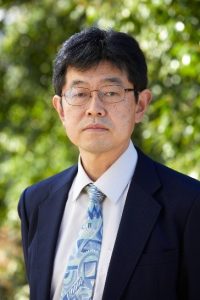
The University of Osaka and National Institute for Environmental Studies (NIES)
Japan
The Asia-Pacific Integrated Model (AIM) and its application to the development of scenarios for achieving decarbonized society
Abstract
This presentation will introduce the research project to develop the AIM (Asia-Pacific Integrated Model) and explain how the AIM is being applied to quantify the scenarios for achieving a decarbonized society in some Asian countries including Japan. In addition to presenting the results of numerical analyses, I will also show the importance of promoting capacity building among researchers in model and scenario development, and enhancing model and scenario literacy among all stakeholders. In Japan, the pathways achieving the net-zero GHG emissions by 2050 have been assessed using the AIM/Enduse model, which selects technologies under exogenously given energy service demand, the AIM/MOGPM, which evaluates future electricity plans, and the AIM/CGE, which illustrates the macroeconomic impacts of GHG reduction measures. These models have quantified the contributions of energy service demand, energy efficiency improvement, electrification, decarbonized energy sources, and negative emissions measures. The AIM is being developed in collaboration with the Asian countries such as Thailand, Indonesia, and Malaysia, and in some of these countries, the AIM is contributing to the formulation of their NDCs (Nationally Determined Contributions) and LT-LEDS (Long-Term Low GHG Emission Development Strategies). Realizing the decarbonized society in all countries requires collaboration among all stakeholders including researchers, policymakers, businesses, citizens and international organizations
Prof. Joseph Sarkis

Worcester Polytechnic Institute
USA
Beyond Net Zero: Reimagining Industry, Technology, and Supply Chains
Abstract
The global transition toward net zero will likely reshape industries, technologies, and supply chains around the world. Yet achieving net-zero emissions, while essential, may not be sufficient to address the broader environmental and systemic challenges facing economies and societies. This address explores what comes beyond net zero. Specifically, a transition toward regenerative systems that restore, renew, and strengthen the socio-ecological systems on which economic activity depends. It examines how industry can move beyond incremental efficiency improvements toward regeneration and even nature-positivity. We touch upon technology’s role including artificial intelligence, digitalization, and advanced analytics that can enable more transformative change. Industrial systems including supply chains will also need to evolve from mechanisms of resource consumption toward systems that support regeneration and contribute positively to nature including carbon negativity. Drawing on emerging research and thought in regenerative business, sustainable operations, and supply chain management, we propose a broader vision of the low-carbon transition—one that connects going beyond decarbonization with resilience, circularity, innovation, and long-term ecosystem regeneration
Prof. Ruzhu Wang

Shanghai Jiao Tong University
China
Heat decarbonation via heat pumps
Abstract
Heat pumps serve as a pivotal technical route for thermal decarbonization, which upgrades low-grade environmental and waste heat into high-grade heating or cooling energy. Massive underutilized low-temperature thermal resources—such as ambient air heat, shallow geothermal energy, solar heat and industrial waste heat—exceed above one billion tons of standard coal equivalent in China per year, whereas conventional conversion methods suffer from extremely low efficiency. This paper elaborates an integrated technical system for high-efficiency low-grade heat utilization. Thermally driven adsorption chillers and variable-stage absorption chillers achieve cooling output driven by 45–150 °C waste heat. Optimized air-source heat pumps supply domestic hot water and stable heating in frigid zones; water vapor compression heat pumps produce 120–150 °C industrial steam as a clean substitute for coal-fired boilers. Desiccant-coated heat exchangers based heat pump realize independent heat-moisture control, nearly doubling air-conditioning COP. Practical projects covering steel mills, data centers and rail transit demonstrate prominent carbon reduction and economic benefits. Relevant national standards have been formulated. Endorsed by the International Institute of Refrigeration, heat pumps provide scalable electrification solutions to slash carbon emissions from buildings and industries and accelerate global carbon neutrality
Get in Touch
 Email: iclcatech@gmail.com
UTM Low Carbon Asia Research,
Universiti Teknologi Malaysia,
81310 Johor Bahru, Johor, MALAYSIA